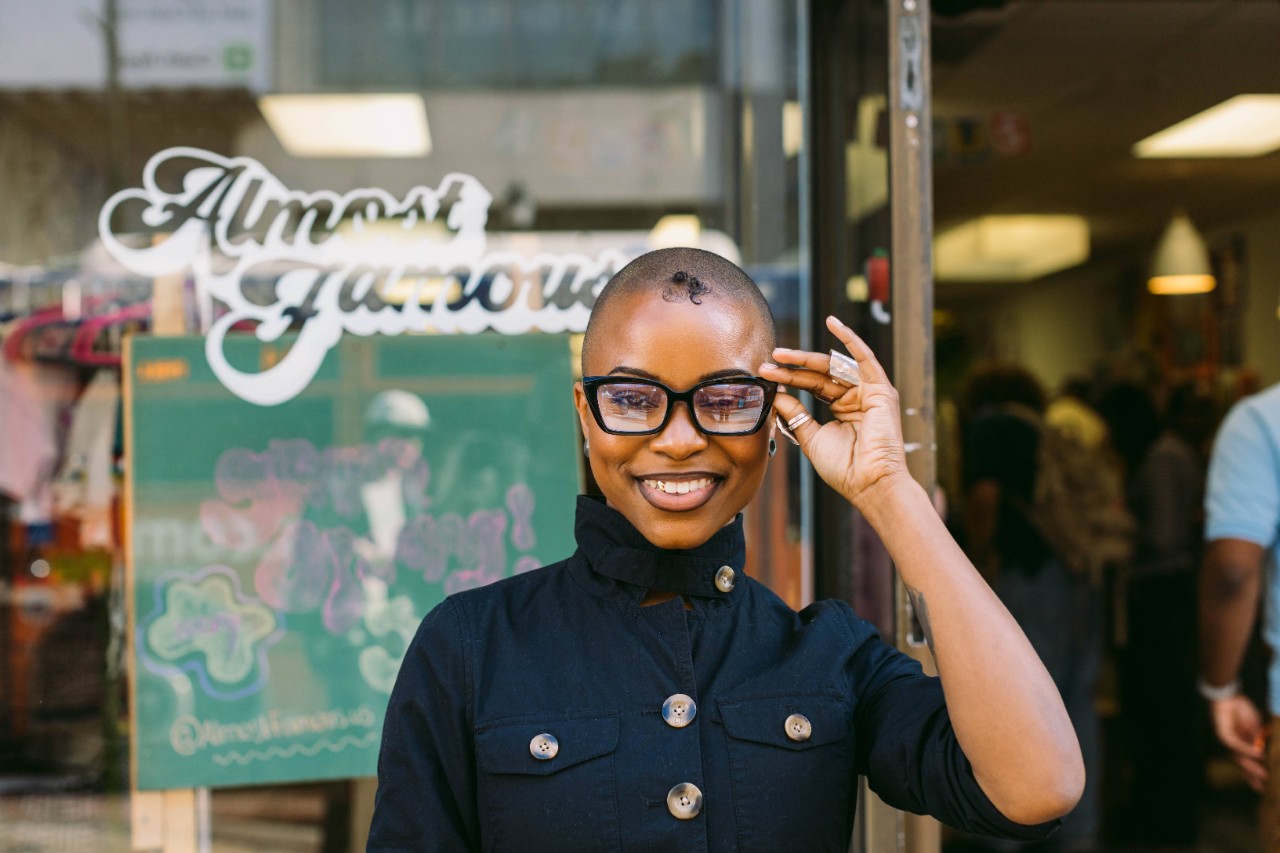


As a child, Jenna Keen ’14 watched her dressmaker grandmother craft clothing with bolts of fabric and a sewingmachine.
“She inspired my interest in apparel from a young age. Seeing the garments she created sparked my appreciation for craftsmanship and attention to detail,” says Keen, a fashion design alumna who is a technical development manager for custom athlete apparel at New Balance in Boston.
But, while Keen says she loved design, she was more drawn to the technical side of the fashion industry.
“My passion lies in perfecting fit, creating flat patterns, and bringing a designer’s vision to life through thoughtful construction and engineering,” she says, noting that her goal is to help create products that perform for elite athletes’ needs and fit exceptionally well.
Keen, originally from South Harrison, New Jersey, has followed her passion to several positions at renowned athletic apparel companies across the country. She recently spoke with Jefferson about her education and the sportswear industry.
Why did you choose Jefferson for your education?
I chose Jefferson because of its outstanding fashion design and textiles program and its strong reputation within the industry. What stood out to me was the balance between the fashion design curriculum and the academic foundation of a Bachelor of Science degree. The program offered a unique blend of design, technical, business, merchandising, product development, and textile coursework that prepares students for a variety of career paths within the apparel industry.
I was also drawn to the collaborative and innovative environment. Seeing the annual fashion show really solidified my decision. It showcased not only the creativity of the students but also the high level of craftsmanship and professionalism that the program fostered.
In addition, Jefferson’s career fairs and industry networking opportunities played a significant role in launching my career.
Where has your Jefferson degree taken you?
My first full-time role came directly from an interview at a Jefferson career fair during my senior year. I began my career as a technical designer at Under Armour. After five years I joined Nike as a technical designer. Today, at New Balance, I lead technical development from concept through commercialization. I oversee fit, garment-pattern development, construction, and product execution to ensure athletes receive quality performance-apparel that meets both functional and aesthetic expectations.
How did each job lead you to where you are today?
Each role has expanded both my technical expertise and my understanding of the apparel industry. One of the most valuable aspects of my career has been the opportunity to travel internationally; it has taught me the importance of building strong relationships, adapting communication styles, and collaborating effectively across different cultures and regions. The custom athleteapparel field has been historically male dominated.
Are you beginning to see a shift with more women entering the field and with more designs focused on women in sports?
While the athletic apparel industry has historically been viewed as male dominated, many of the teams I’ve worked on throughout my career have been led and shaped by talented women.
Where I do see a shift are the growing visibility and investment in women’s sports. As that market expands, brands increasingly recognize that female athletes need products designed specifically for them rather than adaptations of men’s products. This shift is driving greater investment in femalefocused research, athlete testing, and product innovation. We’re seeing more use of body-scan data, fit studies, wear testing, and direct athlete feedback to better understand how women move, compete, and perform.
There has been some talk of the next “big thing” in the industry being the use of AI. How will this affect the industry overall?
I see AI as a tool that supports creativity and productivity rather than replacing human expertise.
Platforms with AI capabilities help teams visualize products faster, simulate accurate fabric physics, and reduce the number of physical prototypes required during development. That said, I don’t see AI replacing designers or technical designers. While AI can generate concepts that may seem impressive at first, it often lacks the accuracy and understanding needed to create garments that are truly wearable, manufacturable, and commercially viable.
How do you see yourself as part of “what’s next” in the athletic wear industry?
I hope to continue being part of what’s next by doing what I love most: solving fit challenges, refining patterns, and creating great products. Throughout my career, I’ve always been passionate about craftsmanship, innovation, and performance. As the industry evolves, I look forward to continuing to learn, mentor others, and help develop products that make athletes feel and perform their best.